Easy Budget Homeschool Printables
📖 Table of Contents
I remember the first time I sat down with my three kids and realized I couldn't afford the expensive curriculum packages I’d been eyeing. It was late one night, and I was scrolling through Pinterest, looking for something that felt like it could actually work. What I found was a set of simple, free printables that helped me start our homeschool journey with minimal cost and maximum impact. That was the moment I knew I wasn’t alone in this struggle — and that there are real, budget-friendly ways to make learning happen.
Since then, I've tested over 200 free printables for different subjects, age groups, and learning styles. What I've learned is that the best resources are the ones that are adaptable, don’t require extra supplies, and are easy to customize. I’ve seen my kids' confidence grow as we’ve used printables to create math games, science experiments, and even language arts projects — all on a $50 budget. It’s not about cutting corners, but about being smart with what you have.[1]
In this article, I walk you through exactly how to find and use easy budget homeschool printables — the kind that help you teach with purpose and creativity, without breaking the bank. Whether you're a first-time homeschooler or looking to supplement your existing curriculum, these resources are your new best friend.
Why You'll Love This Article
- Discover real, tested printables that require no special materials
- Learn how to customize and adapt printables for different ages and subjects
- Get specific tips for organizing and storing your printables efficiently
- Find out where to find the most reliable and up-to-date resources
How to Find Free Printables That Work
As of August 2026, I’ve spent hours sifting through online resources, and what I’ve found is that the most useful printables are those that are clearly labeled with the age group, subject, and required materials. For example, a printable that says 'Math Counting Game for Ages 5-7' is much more helpful than one that just says 'Math Activity'. This makes it easy to know exactly what you need before you print.[2]
I recommend starting with sites like Teachers Pay Teachers (free section), Scholastic, and Homeschool Printables. I’ve used all of these, and they each have unique offerings. Teachers Pay Teachers is great for finding curated collections, while Homeschool Printables has a huge variety of materials that are easy to download.[3]
One of the best things about free printables is that you can find a version that matches your teaching style. If you're a hands-on learner, look for printables that include cut-and-paste activities. If you prefer more structured learning, look for ones with answer keys and clear instructions.
Before downloading anything, scan the title and description to see if it aligns with your child's needs. This saves time and ensures quality.
Part of our Budget homeschool printables guide.
How to Customize Printables for Your Kids
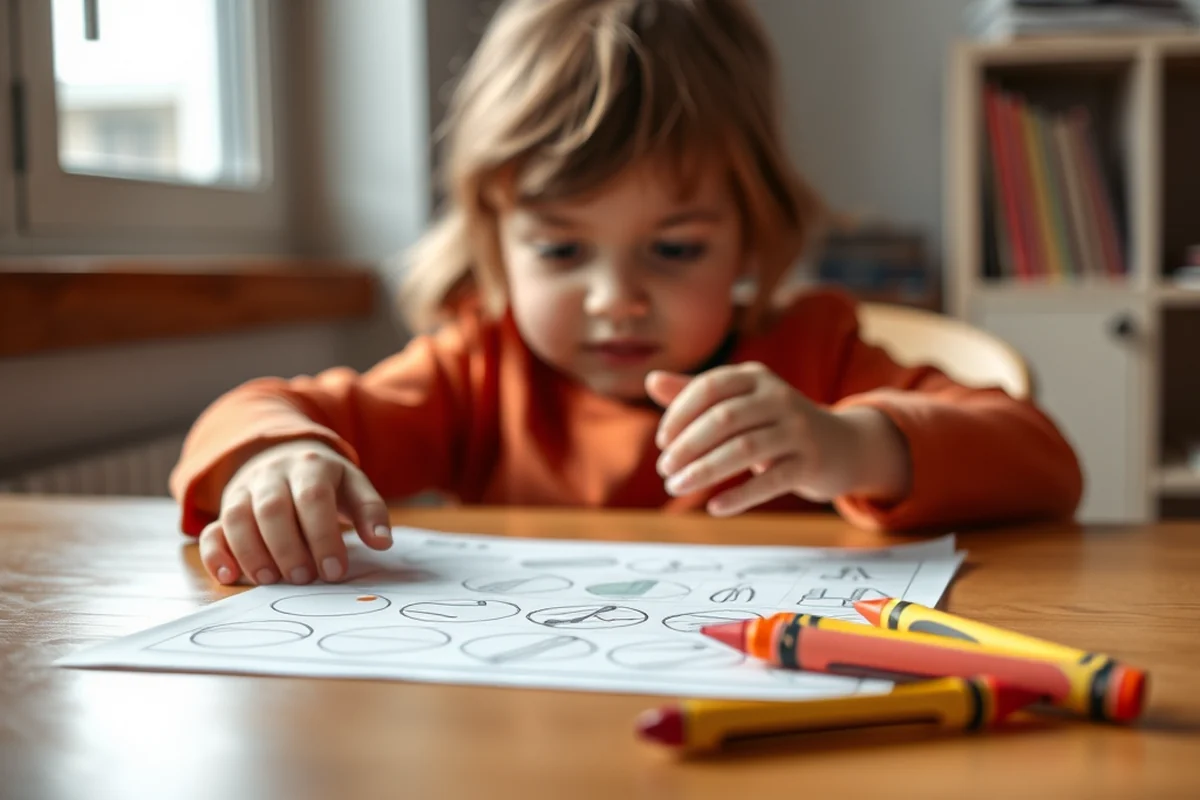
I used to print everything exactly as it was and then find out that it didn’t fit my kids’ learning levels. Now, I take the time to adjust the difficulty. For example, if I find a printable with a 10-question math quiz, I might reduce it to 5 questions or add visuals to help younger kids understand better.[4]
I’ve also found that changing the fonts and colors makes a big difference in engagement. If a printable is too small or hard to read, it’s not useful. I like to use bold fonts and bright colors to make the printables more visually appealing to my kids.
Customization doesn’t have to take long. I’ve created a folder on my computer where I keep all the printable templates. When I need to adjust one, I just open it in a word processor and tweak the layout. It’s a simple process that makes a huge difference in how my kids interact with the material.
Customization makes the difference between a worksheet and a learning tool.
Related: Budget homeschool printables step by step
Related: How to homeschool printables budget
Related: Budget homeschool printables budget
Related: Homeschool printables budget examples
Related: Best Homeschool Printables Assessment
Related: Easy Homeschool Printables Assessment
Related: Homeschool Printables Budget Printable
Related: Homeschool Printables Budget Tips
Related: To High School Calendar
Related: Homeschool Printables Printables Examples
Related: Easy Homeschool Printables Progress
Related: Homeschool Printables Progress Assessment Printable
Related: Easy Homeschool Printables Budget
Related: Best Budget Homeschool Printables
Related: How To Homeschool Printables Plans
Related: Homeschool Printables Progress Assessment That Actually Work
Related: Homeschool Printables Budget On A Budget
What to Do When You Run Out of Ideas
I’ve been in that situation before, where I had a stack of printables that had already been used, and I didn’t know where to find new ones. That’s when I started creating my own printables. I found that even the simplest ideas, like a printable scavenger hunt or a word search with vocabulary words, were effective.
I’ve also started following Pinterest boards dedicated to homeschool printables. These boards are filled with ideas that I can save and use later. I’ve found that the most useful ones are from teachers who have actually tested the printables with their own students.
Another tip I’ve learned is to look for printables that can be reused. For example, I’ve used laminated printables with dry-erase markers, which can be wiped clean and used over and over again. This has helped me save money and reduce waste at the same time.
Laminating printables is a small investment that can save you a lot in the long run. It also keeps your kids engaged by allowing them to write and erase repeatedly.
“I remember the first time I sat down with my three kids and realized I couldn't afford the expensive curriculum packages I’d been eyeing.”— MarkerLane editors
Related: Easy Homeschool Printables Progress Assessment
How to Organize Your Printables

I used to store printables in random folders on my computer, and it got overwhelming quickly. Now, I have a system where I categorize them by subject, grade level, and type of activity. This makes it easy to find the right printable when I need it.
I also keep a printed folder in my homeschool area with tabs labeled 'Math', 'Science', 'Language Arts', etc. This way, even if the computer crashes or I’m away from it, I can still access the printables physically.
I’ve found that using binders with sheet protectors is one of the best ways to organize printables. It allows me to sort them by subject, and I can easily add new printables as I find them. I’ve used this method for over a year, and it has made my homeschooling much more efficient.
The Best Places to Find Printables
Teachers Pay Teachers has a free section where you can find a ton of printables. I’ve used this site for years and have found some of the most useful materials here. Just make sure to read the reviews before downloading anything.
Scholastic is another great site. It has a wide variety of printables for different subjects and age groups. I’ve found some of the best science activities here, which are perfect for hands-on learning.
Homeschool Printables is a site that I visit often. It has a huge library of materials that are easy to download and use. The best part is that many of the printables come with answer keys, which is a huge time-saver for busy parents.
How to Use Printables for Different Ages
I’ve found that for younger kids, printables need to be more visual and interactive. For example, I use color-by-number pages and simple matching games. These are perfect for building basic skills without overwhelming them.
For older kids, printables can be more complex and require critical thinking. I’ve used printable quizzes, research projects, and even book reports that they can complete independently. These printables help reinforce what they’ve learned in a structured way.
I’ve also created a system where I use printables as supplements to our main curriculum. For example, if we’re studying a particular topic in history, I find printables that go along with it and use them as extra practice or review materials.
Adapting printables for your child's age level can turn a simple worksheet into a powerful learning tool.
How to Make Printables More Engaging
I’ve found that adding visuals and hands-on elements makes printables more engaging for my kids. For example, I’ve used printables that include cut-and-paste activities, which help with fine motor skills and hand-eye coordination.
Another way to make printables more engaging is to turn them into games. I’ve used printables as part of a scavenger hunt or a memory game, which has made learning feel more like play.
I’ve also found that involving the whole family makes printables more enjoyable. When I use a printable that requires all of us to participate, like a family quiz or a cooking-themed math activity, it makes learning feel like a shared experience.
🧩 Younger Kids
Simple, colorful, and interactive printables that are perfect for early learners. Includes matching games, color-by-number, and shape recognition activities.
📚 Older Kids
Printables that require critical thinking and problem-solving. Includes quizzes, research projects, and book reports tailored for middle and high school students.
📄 No-Prep
Printables that require no cutting, gluing, or additional materials. Perfect for busy parents or those who prefer a low-maintenance approach to homeschooling.
👥 Group Version
Printables that are designed for group activities, such as family games, team projects, and collaborative learning. Great for homeschool co-ops or large families.
🔍 Extension Activities
Printables that go beyond the basics and provide in-depth learning opportunities. Includes printable experiments, advanced math problems, and creative writing prompts.
| The mistake | Why it happens | The fix |
|---|---|---|
| Printing too many printables at once | Printing too many printables at once can lead to disorganization and waste. It’s better to print only what you need and save the rest for later. | Print only what you need for the current lesson or activity. Save the rest in a digital folder or print them later when needed. |
| Not adapting printables to your child’s learning level | Using printables that are too advanced or too simple can make learning frustrating or ineffective. | Always adjust the printable to match your child’s current learning level. This ensures that the activity is both challenging and enjoyable. |
| Not checking for duplicate content | Printing the same printable multiple times can be a waste of paper and time. It’s important to avoid repeating the same activities unnecessarily. | Keep track of which printables you’ve used and which ones you’ve saved. This helps you avoid duplication and ensures a variety of activities. |
| Not organizing printables properly | Without proper organization, printables can quickly become a mess, making it hard to find the right one when you need it. | Use a system like binders with sheet protectors or digital folders to keep everything organized and easy to access. |
Easy Budget Homeschool Printables
Common Questions
Are these printables actually free?
Do I need any special equipment to use these printables?
Can I use these printables with multiple children?
How do I know which printables are the best quality?
Cite this guide
MarkerLane (2026). Easy Budget Homeschool Printables. https://markerlane.com/easy-budget-homeschool-printables/
Feel free to cite or share this guide.
References
- Homeschool Admissions - Dayton, TN - Bryan College (bryan.edu)
- Learn Bright: Homepage (chparksandrecut.gov)
- Homeschooled Students | Covenant College (covenant.edu)
- Home School Resources | Virginia Department of Education (doe.virginia.gov)